
Seeing a crusty, white residue on your favorite faucet feels incredibly frustrating. You scrub your bathroom until it shines, only to find those stubborn chalky spots returning a few days later. This persistent residue is limescale. It forms when minerals in your water supply dry and harden on your plumbing fixtures.
Dealing with limescale is a constant chore for many homeowners. Beyond looking unsightly, this mineral accumulation can severely impact the function of your plumbing network. Left untreated, it restricts water flow, clogs showerheads, and shortens the lifespan of expensive household appliances.
Treating the symptoms of hard water requires the right cleaning techniques, while fixing the root cause requires specialized equipment. This guide explores the exact causes of mineral deposits and offers practical, actionable steps to protect your home.
What causes scale buildup in your plumbing fixtures?
To defeat limescale, you first need to identify why it forms in your home. The underlying culprit is almost always the chemical composition of your municipal or well water supply.
What exactly is hard water?
Hard water contains high concentrations of dissolved minerals, primarily calcium and magnesium. When water falls as rain, it is naturally soft. As it travels through the ground and into local waterways, it absorbs these naturally occurring minerals. For example, Indianapolis water hardness averages around 320 milligrams per liter, or 19 grains per gallon [Citizens Energy Group, 2024]. Anything above 7 grains per gallon is considered hard water, making the Indianapolis water supply extremely hard.
How do minerals deposit on your faucets and showerheads?
When you turn off a faucet or finish a shower, tiny droplets of water remain on the surface of the metal fixtures. As the water evaporates, it leaves the dissolved calcium and magnesium behind. These microscopic mineral deposits accumulate over time, crystallizing into a hard, chalky substance known as limescale. Heat accelerates this evaporation process, which is why scale builds up rapidly around hot water taps and inside water heaters.
What are the early warning signs of limescale buildup?
Catching scale formation early allows you to manage it before it permanently damages your plumbing components.
What visual cues appear on faucets and showerheads?
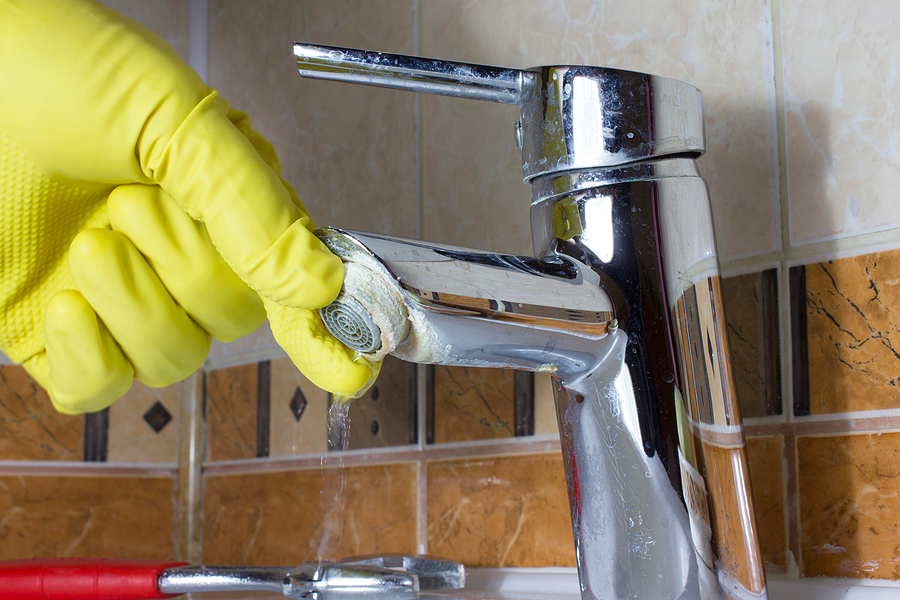
The earliest sign of hard water is a dull, cloudy film on metallic finishes, glass shower doors, and ceramic tiles. Over time, this film develops into a thick, crusty white or green-tinged buildup around the aerator of your sink or the nozzles of your showerhead. You might also notice chalky rings around the base of your bathroom fixtures.
Does scale buildup reduce water flow and appliance efficiency?
Yes, severe mineral accumulation actively blocks water flow. If your showerhead starts spraying water in erratic directions or the water pressure from your sink drops noticeably, scale is likely clogging the internal aerators. Inside your appliances, limescale coats the heating elements of dishwashers and water heaters. This forces the machines to consume more energy to heat the water, decreasing their overall efficiency and increasing your utility bills.
What are the best home remedies for minor scale buildup?
If you notice early signs of mineral deposits, you can usually dissolve them using common household items.
How does vinegar act as a natural descaler?
White vinegar contains acetic acid, which safely and effectively breaks down calcium deposits without damaging most metal finishes. To clean a crusty faucet, soak a rag in white vinegar and wrap it tightly around the fixture. Leave it for at least an hour, or overnight for severe buildup. According to [Mira Showers, 2024], soaking the affected area in white vinegar is the best way to get rid of stubborn limescale deposits.
Can lemon juice and baking soda clean scale buildup?
Lemon juice contains high levels of citric acid, which serves as an excellent alternative to vinegar. You can cut a lemon in half and rub it directly onto the hard water stains. For tougher spots, create a thick paste using baking soda and a few drops of water. Apply the paste to the limescale, let it sit for ten minutes, and gently scrub the area with an old toothbrush.
When should you use commercial descaling chemicals?
Choose commercial descalers only if natural acids fail to remove the buildup. These chemical cleaners are highly potent and work quickly, but they contain harsh ingredients. You must wear gloves and ensure adequate ventilation when applying commercial descalers. Always check the manufacturer’s guidelines on your plumbing fixtures to ensure the harsh chemicals will not strip the metal finish.
How can you prevent future scale buildup on your fixtures?
Cleaning limescale treats the symptom. Preventing it from forming requires proactive intervention.
What regular cleaning habits stop limescale?
The easiest way to stop scale is to prevent hard water from drying on your surfaces. Keep a microfiber cloth or a small squeegee in your bathroom. Wipe down the shower walls, glass doors, and metallic faucets immediately after use. Removing the moisture entirely prevents the calcium and magnesium from crystallizing on the fixtures.
What are the benefits of installing a water softener?
A whole-house water softening system addresses the problem at the source by altering the water chemistry before it enters your home’s pipes.
- Salt-based water softeners: These systems use an ion exchange process. They physically remove calcium and magnesium ions from the water and replace them with sodium ions, completely eliminating the possibility of scale formation.
- Salt-free water conditioners: These systems do not remove the minerals. Instead, they alter the chemical structure of the calcium and magnesium so the minerals cannot stick to plumbing surfaces. Choose a salt-free system if you want to avoid adding sodium to your water or performing routine maintenance.
When should you call a professional for scale issues?
Sometimes, mineral accumulation surpasses what household cleaners can handle.
Are persistent clogs caused by limescale?
If you soak a showerhead in vinegar overnight and the water pressure remains low, the scale blockage likely exists deeper inside the plumbing lines. Mineral deposits can accumulate inside the pipes themselves, slowly restricting the diameter of the pipe. A professional has specialized tools to identify and clear these deep internal blockages.
How do you protect your appliances from scale damage?
When hard water damages the internal components of a tankless water heater or a washing machine, DIY cleaning is risky. Attempting to descale internal appliance parts without proper knowledge can void the manufacturer’s warranty. Call a licensed plumber to flush your water heater and restore your heavy appliances.
What are the advanced solutions for whole-house scale prevention?
For homes in areas with extremely hard water, manual cleaning is an endless battle. Upgrading your home’s water treatment equipment offers permanent relief.
Why is a water softener system a good long-term investment?
Investing in a water softener drastically extends the lifespan of your plumbing network, dishwasher, washing machine, and water heater. By preventing mineral buildup, these appliances operate at peak efficiency, which lowers your monthly energy bills. Furthermore, soft water requires less soap and detergent to create a lather, saving you money on household cleaning supplies.
Do you need professional installation for a water softener?
You should always hire a professional to install a whole-house water softening system. The installation process requires cutting into your home’s main water supply line, setting up a bypass valve, and ensuring proper drainage for the system’s regeneration cycle. Improper installation can lead to major water leaks and costly home damage.
Frequently Asked Questions (FAQ)
Is scale buildup harmful to human health?
No, limescale buildup is not harmful to human health. The calcium and magnesium found in hard water are essential minerals that the human body needs. However, the rough surface of severe scale buildup can harbor harmful bacteria if it is not cleaned regularly.
Can limescale buildup damage residential plumbing pipes?
Yes, severe limescale buildup can permanently damage residential plumbing pipes. As the minerals accumulate inside the pipe, they restrict water flow and increase the internal water pressure. Over time, this excessive pressure can cause pipes to leak or burst entirely.
How often should you descale your household plumbing fixtures?
You should descale your household plumbing fixtures every three to four weeks if you live in an area with hard water. If you own a water softening system, you only need to clean your fixtures during your routine household cleaning schedule.
Keep your home water flowing freely
Dealing with crusty faucets and clogged showerheads is a frustrating reality for many homeowners living with hard water. By recognizing the early signs of mineral accumulation and using natural solutions like white vinegar, you can keep your surfaces looking clean. However, the most effective way to eliminate this chore forever is to treat the water before it reaches your fixtures.
If you are tired of scrubbing fixtures, we can help. For expert water softener repair and service in Indianapolis, Indiana, reach out to our team today. You can get a new Metered 48,000 Grain unit Clack On Demand Water Conditioner, completely installed with a 4-year labor warranty and a 7-year parts warranty, for under $1300!
Related Post: Solving Hard Water Problems in Your Home: Common Treatment Options